How AI Face Swap Went From Hollywood to Everyone's Browser
Discover how AI face swap evolved from early visual effects into modern AI-powered video creation. Learn why the technology became mainstream and how people use it today.
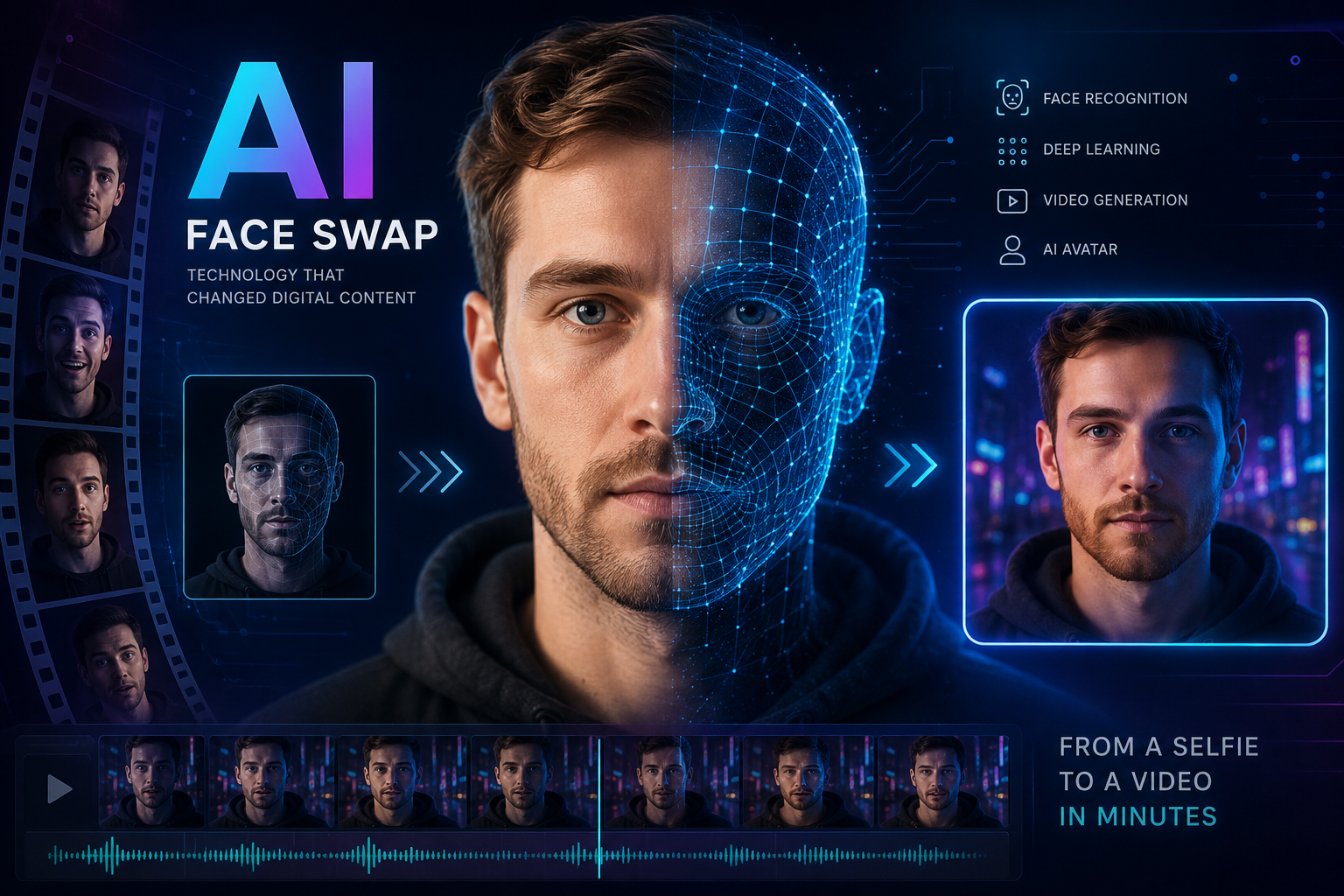
Why AI Face Swap Suddenly Became Everywhere
If someone had shown you a convincing face swap ten years ago, your first reaction would probably have been, "That must have taken forever to make."
Today it's almost boring.
Upload a photo, wait a minute, download the result. That's all it takes. Funny how people get used to technological magic. Give us a miracle twice, and by the third time we're already asking why it isn't faster.
What's interesting is that the idea itself isn't new. Editors and VFX artists experimented with face replacement long before AI became part of everyday conversation. The difference was effort. Creating even a few believable seconds often meant hours of manual work, careful tracking and endless adjustments. It wasn't something you'd do just to make a birthday meme.
Artificial intelligence changed the equation.
Modern models don't simply paste one face over another. They analyze expressions, head movement, lighting and tiny details that our eyes notice without us realizing it. That's why recent results feel surprisingly natural. The software isn't copying a picture. It's recreating how a face behaves.
That shift quietly transformed the audience.
Face swapping stopped being a niche hobby for video editors and suddenly became accessible to teachers, marketers, designers, content creators and people who simply wanted to surprise a friend. The technology didn't become popular because everyone suddenly cared about AI. It became popular because it removed a difficult job from the creative process.
The same thing happened with AI-generated video.
Not long ago, making a short talking-head clip required recording equipment, editing software and at least a little patience. Now a single portrait can become an animated video complete with natural expressions and synchronized speech. The technical barrier has almost disappeared, leaving people free to focus on the idea instead of the production.
That may be the biggest change of all.
Most users aren't trying to fool anyone. They're making social media posts, personalized greetings, promotional videos or simply testing their imagination. It's closer to digital storytelling than visual trickery.
Of course, every powerful technology brings uncomfortable questions with it. Consent, authenticity and responsible use aren't side topics anymore. They're becoming part of the product itself, and the best platforms increasingly treat safety as a feature rather than an afterthought.
Where does it go from here?
Probably somewhere less dramatic than people expect.
The future isn't about creating ever more shocking deepfakes. It's about making video creation feel as ordinary as editing a photo became years ago. When software fades into the background and creativity becomes the difficult part again, that's usually a sign the technology has finally grown up.